The Ugly Duckling
Before reading
Andersen’s original includes several harsh and sorrowful passages for younger listeners. In this adaptation I wanted to protect the calm mood of bedtime while keeping the full arc of waiting and transformation intact: it is especially comforting from age four onward when a child is navigating a new classroom or group and still finding their footing.
Broad green burdock leaves bent over the quiet water of the summer moat, sheltering the warm nest where Mother Duck had been waiting for days.
All the eggs had cracked open with a gentle tapping sound except the last one, larger and paler than the rest. When its shell finally gave way, out stepped a chick with gray down, a long neck, and slightly clumsy feet. He tried a shy quack beside his yellow brothers, though his voice already sounded deeper.
As soon as his mother led him into the poultry yard, sideways glances began. The old duck who wore a red ribbon tied around her leg turned up her beak, declaring him far too big and awkward for a proper brood. The turkey puffed out his neck feathers like a scarlet wheel and blocked his path. Even among the hens the little one heard giggles and whispers behind his back, until at last his own mother sighed as she watched him swim off alone.
One morning, weary of tucking his bill beneath his wing, the little gray bird hopped over the hawthorn hedge and reached the wide marsh of the wild ducks. There the air smelled of cool mud and water mint. A clear stream carried fresh water among the willow roots, where he learned to forage for himself and sleep rocked by the rustle of reeds.
Soon, however, autumn arrived with low clouds and fine rain drawing slow rings across the dark mirror of the marsh. One evening, just as the sky turned copper, he saw a flock of great white birds pass overhead with curved necks and wings as wide as sails. They gave a clear call flying south, and a gentle longing stirred in his chest that he could not explain.
Then winter set in. Frost crept along the edges of the water, and on one still night the pond froze smooth as glass, holding the young bird fast among the rushes. At daybreak a passing farmer saw him shivering, gently broke the ice around his webbed feet with the rim of his wooden clog, and carried him home to warm beside the hearth. As soon as his strength returned, the young bird slipped back outdoors, sheltering beneath the willows until the snow began to melt.
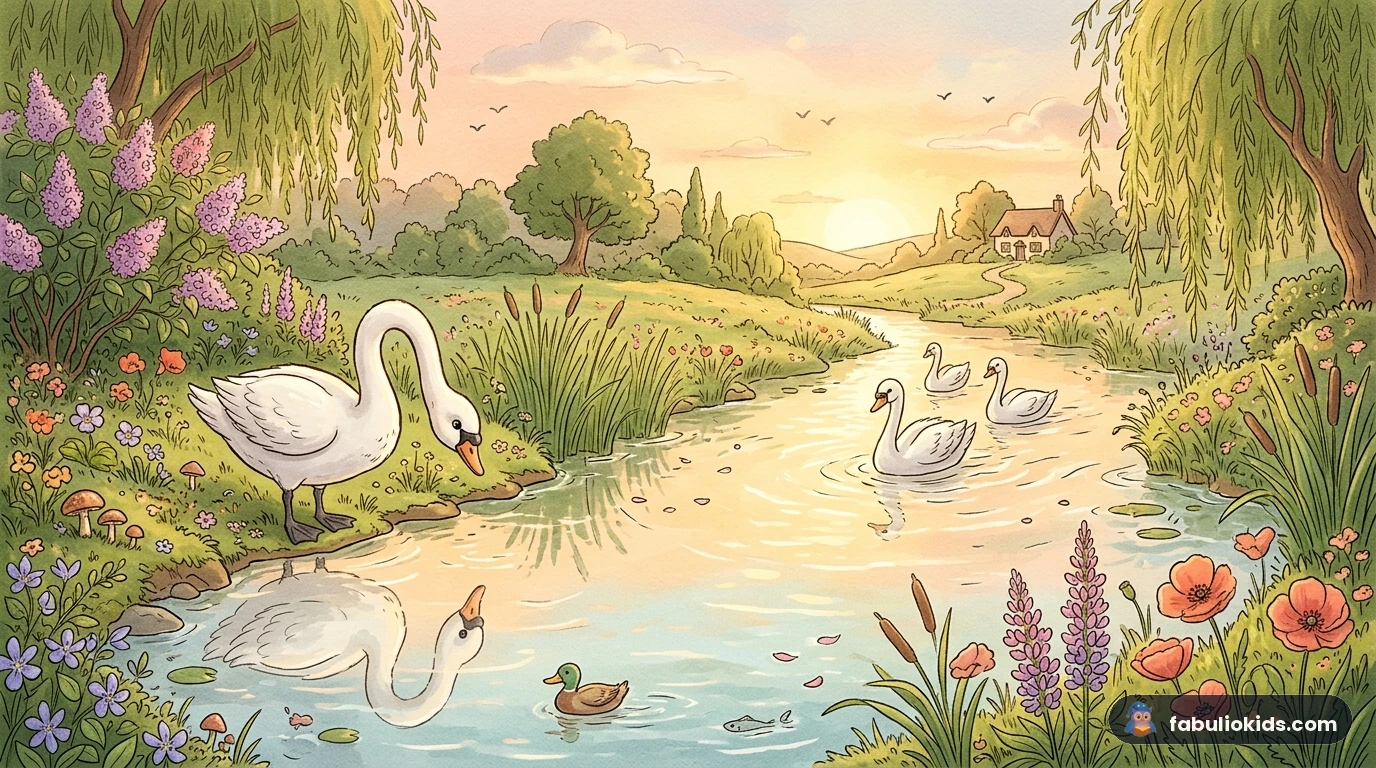
With spring, warm sunlight warmed the lilac bushes and the green reed banks once more. The young bird spread his wings and noticed they had grown broad, light, and strong: a single beat lifted him above the treetops and carried him down into a spacious garden crossed by clear canals.
Upon the water glided three splendid white swans, graceful as boats of silk. He drew near quietly along the bank, ready to turn away if they chased him off as everyone had done in last summer’s barnyard.
He bowed his head humbly toward the clear water of the canal in greeting, and right there he saw his own still reflection in the bright surface. No clumsy gray chick looked back: before him shone a young swan with snow-white feathers and a graceful neck.
The three swans swam close beside him, brushing him softly with their wings in silence, while children along the meadow clapped their hands and pointed to the newcomer. The young swan tucked his head gently beneath his wing, remembering with quiet gratitude every season he had crossed before finding his sky, while the canal water flowed calmly on beneath the soft golden light of sunset.